Last Call, First Class: Seven Definitive Nightcaps and the Exceptional Bars That Pour Them Best
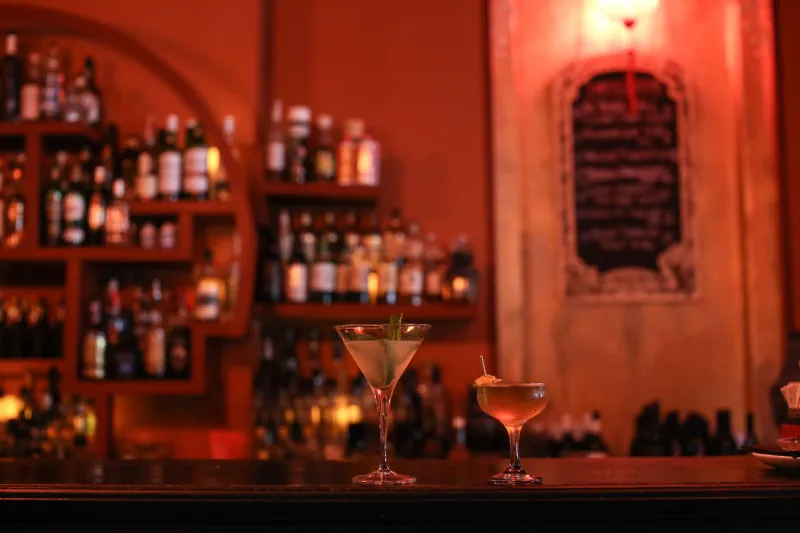
There is a particular kind of pleasure reserved for those who linger. Long after the dinner plates have been cleared and the evening's conversations have reached their natural crescendo, the discerning guest understands that the night need not simply conclude — it may be elegantly closed. The nightcap, that time-honored tradition of the final pour, exists precisely for this purpose: to offer a moment of quiet ceremony before the world outside reclaims you.
The ritual has roots that stretch across centuries and continents. Victorian gentlemen reached for brandy; Parisian boulevardiers favored a measured pour of Chartreuse; American jazz-age sophisticates nursed Stingers in dimly lit hotel bars. What unites every iteration of the tradition is intentionality. A nightcap is never hurried. It is chosen with care, consumed with attention, and ideally enjoyed in a room worthy of the occasion.
Lounge 72 presents seven defining nightcap selections — each with its own character, history, and ideal setting — alongside the American bars and lounges that have elevated the late-night pour to something approaching art.
1. Aged Cognac: The Unhurried Classic
Few spirits communicate refinement quite as fluently as a well-aged cognac. Whether an XO expression from Rémy Martin or a single-estate offering from Frapin, cognac rewards patience — both in its production and in its consumption. Swirled slowly in a wide-bowled snifter, it releases layers of dried fruit, oak, and warm spice that seem almost designed for late-night contemplation.
Where to find it: The Bar at the Mandarin Oriental in New York City maintains one of the most carefully curated cognac selections on the East Coast. Perched above Columbus Circle with skyline views that feel almost cinematic, it is a room that understands the value of the unhurried moment.
2. The Negroni: Bitter, Beautiful, and Enduring
Count Camillo Negroni allegedly requested a stronger version of his Americano in a Florence bar sometime around 1919, and the world of cocktails has never quite recovered. Equal parts gin, sweet vermouth, and Campari, the Negroni is a study in balance — its bitterness tempered by sweetness, its herbal complexity brightened by citrus. As a nightcap, it functions as both a digestif and a conversation piece.
Where to find it: Employees Only in New York's West Village has long been regarded as one of the country's premier cocktail destinations. Their Negroni is assembled with a precision that borders on the ceremonial — spirit-forward, properly stirred, and served over a single large ice cube that melts at a rate calculated to protect the drink's integrity.
3. Amaro Montenegro: The Bartender's Handshake
Among those who work behind the stick, amaro occupies a position of deep reverence. Amaro Montenegro — with its 40-plus botanicals, notes of orange peel, vanilla, and eucalyptus — has become something of a professional touchstone. Served neat at room temperature or gently chilled, it is the kind of drink that signals to a room that you know exactly what you are doing.
Where to find it: The Violet Hour in Chicago's Wicker Park neighborhood has cultivated an atmosphere of studied elegance since 2007. Their amaro program is extensive, and the staff's knowledge of each bottle's provenance and flavor profile is the sort of expertise that transforms a simple order into an education.
4. The Sazerac: New Orleans in a Glass
America's oldest cocktail — rye whiskey, Peychaud's bitters, a rinse of absinthe, and a lemon peel expressed but never dropped — carries with it the full weight of New Orleans history. As a nightcap, the Sazerac is authoritative without being aggressive, complex without demanding effort from the drinker. It is, in the most complimentary sense, a drink that does the work for you.
Where to find it: The Sazerac Bar within the Roosevelt Hotel in New Orleans is, by any reasonable measure, hallowed ground. The bar itself dates to 1938, and the murals lining its walls depict scenes of Louisiana life that have watched over generations of late-night conversations. Ordering a Sazerac here is less a choice than a pilgrimage.
5. Port: The Forgotten Luxury
Tawny port — particularly a 20-year expression from a producer such as Taylor Fladgate or Graham's — occupies a curiously underappreciated position in American nightlife. Rich with notes of toasted walnut, caramel, and dried apricot, a small pour of aged tawny requires nothing from you except attention. It is, perhaps, the most forgiving of all nightcaps: approachable to the uninitiated, deeply rewarding to the connoisseur.
Where to find it: Palizzi Social Club in Philadelphia, while famously members-only in spirit if not always in practice, offers a wine and spirits list that reflects the serious intentions of its operators. Their by-the-glass port selection is quietly exceptional, best enjoyed in the club's warm, wood-paneled interior.
6. The Espresso Martini: A Modern Ceremony
Dick Bradsell created the original version of this drink in London in the 1980s, reportedly at the request of a model who wished to be simultaneously woken up and settled down. Decades later, the espresso martini has completed a full cultural arc — from trend to cliché to genuine classic. When prepared with freshly pulled espresso, quality vodka, and a measured hand with the coffee liqueur, it is a nightcap of considerable sophistication.
Where to find it: Dante in New York's Greenwich Village, a multi-award-winning bar with roots stretching back to 1915, produces an espresso martini that has become something of a benchmark. The three coffee beans floated atop the foam are not merely decorative — they are a signal that what follows has been taken seriously.
7. Islay Scotch: For Those Who Prefer the Road Less Traveled
A dram of peated Islay Scotch — Laphroaig 10, Ardbeg Uigeadail, or the coastal complexity of Bruichladdich's Port Charlotte — is a nightcap for those who find comfort in the elemental. Smoke, brine, iodine, and a warmth that settles in the chest like a long exhale: this is a drink that asks to be respected rather than simply consumed. Served neat with a small carafe of still water on the side, it constitutes perhaps the most meditative close to an evening available to the modern drinker.
Where to find it: The Dead Rabbit in New York's Financial District maintains a Scotch and whiskey program of remarkable depth. Their late-night crowd tends toward the knowledgeable, and the staff's willingness to guide a guest through the nuances of each expression — without condescension — reflects the establishment's broader commitment to genuine hospitality.
The Deliberate Close
What each of these drinks shares — beyond their individual character and the distinguished rooms in which they are best encountered — is the quality of intention. A nightcap is not a drink consumed out of habit or obligation. It is a choice made with full awareness that the evening is drawing to a close, and that it deserves a proper farewell.
The bars and lounges identified here understand this instinctively. They have designed their spaces, trained their staff, and curated their programs with precisely this moment in mind: the quiet hour when the crowd has thinned, the conversation has deepened, and a single well-chosen glass becomes the most eloquent possible way to say goodnight.
At Lounge 72, we believe that how an evening ends matters as much as how it begins. Choose accordingly.