No Signal Required: The Rise of the Deliberately Invisible Lounge
There is a particular kind of satisfaction reserved for those who know where to go when no one else does. In an era when a cocktail's visual appeal is engineered as much for a smartphone screen as for a palate, a countervailing movement has taken quiet, deliberate hold in the upper registers of American nightlife. The most compelling lounges of this moment are not the ones trending on social media. They are the ones that have made a conscious decision to disappear from it entirely.
This is not nostalgia. It is strategy — and, for a certain kind of patron, it is relief.
The Scarcity Principle, Reapplied
For decades, exclusivity in nightlife was enforced through velvet ropes, door policies, and the theater of rejection. The architecture of desire was visible, even theatrical. What has changed in the current climate is subtler and, in many respects, more effective. The new exclusivity is informational. You cannot be turned away from a place you have never been able to locate.
Operators of invitation-only and deliberately low-profile venues across cities including New York, Los Angeles, Chicago, and Washington, D.C., describe a clientele that is not merely wealthy but specifically fatigued — fatigued by the performance that public nightlife increasingly demands. One hospitality director in Manhattan, speaking on the condition of anonymity in keeping with the ethos of the establishment she oversees, described her regular guests as people who have grown weary of rooms designed to be documented. "They want to be present," she said. "Not curated."
The psychology of scarcity is well understood in luxury markets, but its application to experiential spaces carries an additional dimension. When a venue removes itself from the digital discovery ecosystem, it does more than limit access — it reframes the nature of the experience itself. Attendance becomes an act of belonging rather than consumption.
Word of Mouth as the New Velvet Rope
In the absence of a social media presence, a website, or even a listed phone number, recommendation becomes the only currency that matters. This is not accidental. Several operators of private lounges have described the referral process as a deliberate filtering mechanism — one that ensures the room is populated by individuals who share a common sensibility, not merely a common tax bracket.
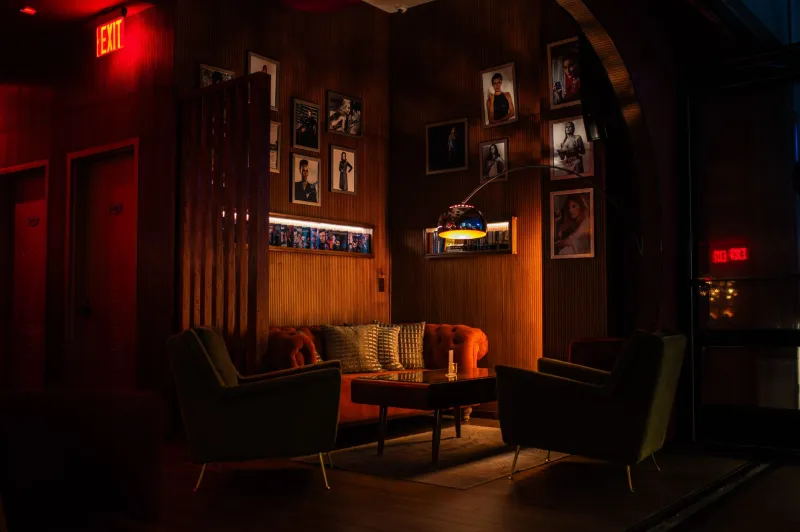
The distinction is meaningful. Affluence alone does not guarantee comportment. The guests who find their way into these spaces tend to arrive already understanding the implicit contract: phones remain in pockets, conversations remain within the room, and the experience itself is not leveraged for social capital elsewhere. The lounge, in this model, functions less as a destination and more as a private institution — akin, in spirit if not in formality, to a members' club of an earlier era.
In Chicago, a beverage consultant who has worked with several such venues noted that the referral culture creates its own accountability. "When someone brings a guest, their own standing is implicitly on the line," he explained. "That changes how people behave before they even walk through the door."
What the Room Offers That the Feed Cannot
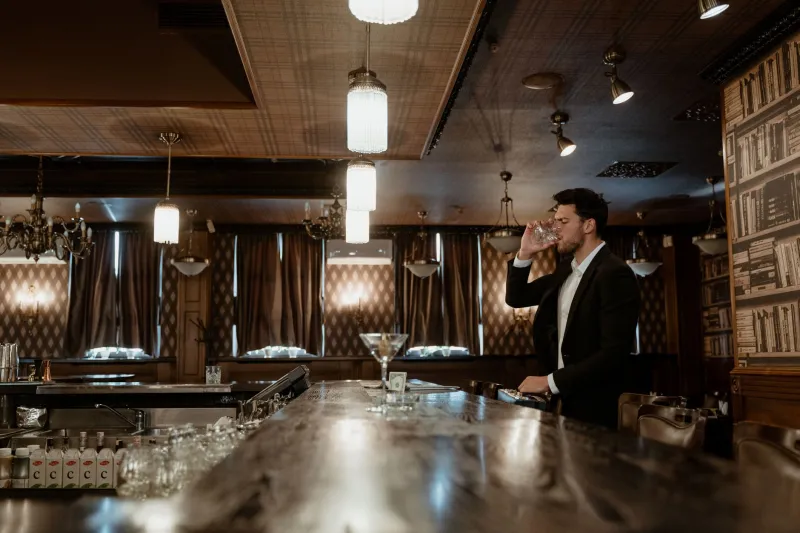
The experiential proposition of the invisible lounge rests on something deceptively simple: the undivided attention of everyone present. Without the ambient pressure to document, guests tend to engage differently — with their drinks, with their companions, and with the room itself. Bartenders at these venues frequently describe the quality of conversation as categorically distinct from what they encounter in high-visibility establishments.
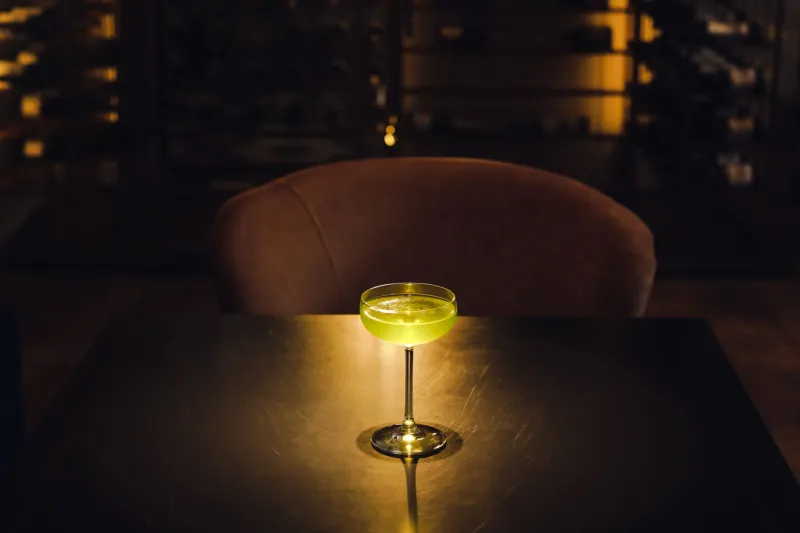
The cocktail programs at such lounges reflect this orientation. Menus, when they exist at all, tend toward restraint rather than spectacle. There are no dry-ice presentations engineered for video, no garnishes assembled with the dimensions of a phone screen in mind. What there is, consistently, is precision — in spirit selection, in technique, and in the quiet ceremony of service. A well-made Negroni in a room where no one is photographing it is, by any honest measure, a different experience than the same drink served under the ambient glow of a dozen raised screens.
This is not a condemnation of the photographed cocktail, which has its own legitimate pleasures. It is, rather, an acknowledgment that the two experiences serve fundamentally different purposes.
The Cities Where Invisibility Thrives
While the phenomenon is national in scope, certain cities have proven particularly fertile ground for the deliberately invisible lounge. New York's density of media professionals and finance figures creates a natural demand for rooms where discretion is structural rather than merely promised. Los Angeles, despite — or perhaps because of — its image-saturated culture, has seen a pronounced appetite among entertainment industry figures for spaces that operate entirely outside the promotional ecosystem.
Washington, D.C., given the particular sensitivities of its professional class, has long maintained a tradition of rooms that do not advertise their most notable guests. That tradition has found new expression in a handful of venues that have formalized the arrangement, offering not just privacy but the genuine assurance that comes from a room populated exclusively by those who understand why privacy matters.
In smaller but culturally significant markets — Nashville, Austin, and Miami among them — the model is gaining traction among a clientele that has grown sophisticated enough to recognize what it is trading away when it chooses visibility.
The Authentic as Luxury
There is something worth examining in the fact that authenticity — the condition of being unperformed, unfiltered, and unmeasured — has become, in certain circles, the most coveted luxury available. It suggests that the saturation of the curated experience has created a genuine hunger for its opposite.
The invisible lounge does not promise perfection. It promises something rarer: the freedom to be imperfect in company that is not watching. For the urban professional who spends the better part of each day navigating the demands of professional visibility, that freedom carries a value that no follower count can approximate.
At Lounge 72, we have always held that the finest evenings are defined not by where they are seen but by what they contain. The rooms that have chosen to remove themselves from the frame have not diminished their offering. They have clarified it.
The night, at its best, belongs to those who are fully inside it — not to those broadcasting from its edges.