Heard in the Quiet: How America's Most Refined Lounges Are Making Silence the New Spectacle
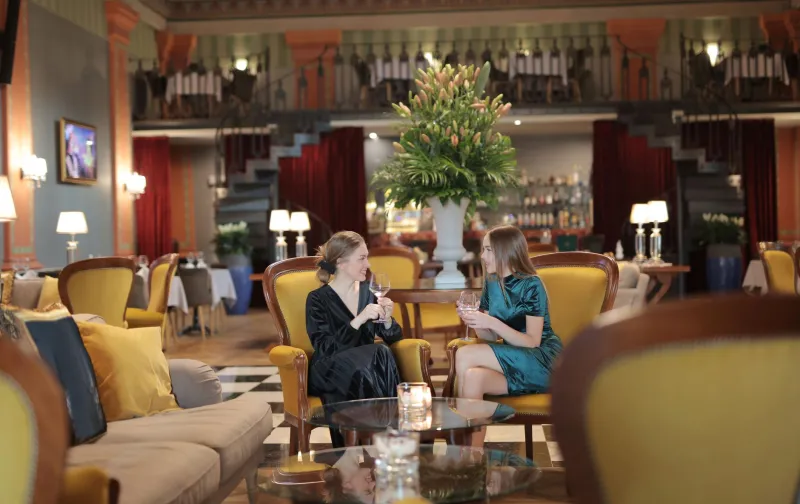
There is a particular kind of pleasure in being able to lean across a table, speak at a measured volume, and be heard completely. No repetition. No theatrical gesturing. No cupped hand near the ear. Just conversation, unobstructed. In the contemporary American lounge landscape, this experience has become so rare that venues capable of delivering it are now regarded with something approaching reverence among urban professionals who have grown quietly exhausted by the tyranny of the decibel.
The irony is not lost on the hospitality industry's sharper minds: at a moment when nightlife has never been louder, the most powerful statement a venue can make is the deliberate cultivation of calm.
The Decibel Arms Race and Its Discontents
For the better part of two decades, volume operated as a proxy for vitality in American nightlife. A packed room with a pounding sound system signaled desirability. Operators stacked speakers, DJs competed for bragging rights, and the implicit message was clear: if you can hear yourself think, the party hasn't started yet.
The professional class absorbed this logic even as it chafed against it. Business entertaining migrated to restaurants rather than lounges because the latter had become acoustically inhospitable to anything resembling substantive exchange. The lounge, once the spiritual home of the unhurried conversation, had ceded that ground entirely.
What followed was predictable in retrospect. When the pendulum swings far enough in one direction, a counter-movement emerges not from nostalgia but from genuine need. The most perceptive lounge operators in cities from New York to Chicago to San Francisco began to notice that their highest-spending guests—the ones ordering the aged single malts and the reserve wine pours—were requesting corner tables, quieter rooms, anything that might allow them to actually conduct the evening they had come for.
Architecture as Acoustic Intention
The shift, where it has taken hold, is not accidental. It represents a significant investment in what hospitality designers now call acoustic architecture—the deliberate engineering of a room's sonic environment from the ground up.
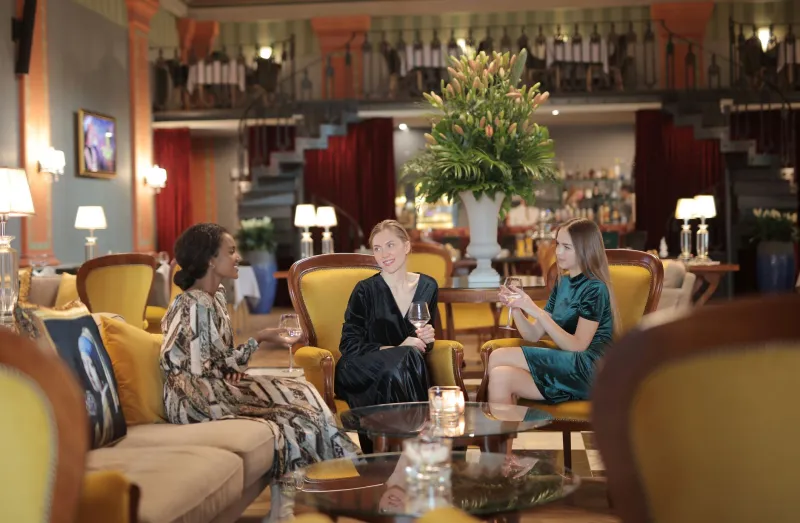
Materials matter enormously. The hard surfaces that became fashionable in the minimalist lounge interiors of the 2000s—exposed concrete, raw steel, glass walls—are acoustic nightmares, bouncing sound rather than absorbing it. The newer generation of acoustically conscious venues is returning to materials with natural dampening properties: deep-pile upholstery, heavy drapery, cork and felt wall treatments, coffered ceilings that break up and diffuse sound waves before they compound into an unintelligible roar.
Beyond materials, the layout itself becomes a tool. Intimate booth configurations, partial walls that create acoustic pockets, and the strategic placement of soft furnishings as sound buffers all contribute to an environment where conversation can exist at a human register. Some venues have gone further still, commissioning acoustic consultants—the same professionals who design recording studios and concert halls—to map the sound behavior of a space before a single piece of furniture is placed.
The Curated Soundscape: What You Hear When You Can Actually Hear
Silence in a lounge setting is, of course, a relative term. What the most thoughtful operators are pursuing is not an absence of sound but a mastery of it—a curated sonic environment that enhances rather than overwhelms.
This has given rise to the role of the sound director, a position that sits somewhere between a music programmer and an acoustician. Where a conventional venue might hand a playlist to a DJ and consider the matter settled, acoustically intentional lounges approach their soundscapes with the same rigor applied to their cocktail programs. Volume levels are calibrated by the hour, shifting subtly as the evening progresses. Musical selections prioritize texture and atmosphere over rhythmic insistence. The goal is a background that the ear can rest upon rather than fight against.
Some venues have embraced natural sound design: the low murmur of a water feature, the soft crackle of a fireplace, ambient recordings drawn from natural environments. These elements serve a dual purpose, providing enough acoustic presence to prevent the discomfort of true silence while establishing a sensory register that signals unhurried sophistication.
Quietude as Social Currency
There is a cultural dimension to this shift that extends beyond acoustics. For the professional demographic that frequents establishments like those celebrated at Lounge 72, the ability to conduct a meaningful conversation has become a form of social currency in itself.
The cocktail hour, at its best, is where relationships are built, ideas are tested, and the careful work of professional and personal trust is conducted. None of this is possible when the ambient noise level requires participants to shout. The lounge that understands this is not simply offering a quieter room—it is offering the conditions under which something genuinely valuable can occur.
This repositioning carries real commercial logic. Guests who can converse comfortably linger longer. They order more thoughtfully, working through the menu with the deliberation that high-margin items require. They return, and they bring others. The acoustically hostile venue, by contrast, accelerates turnover in ways that may appear efficient but ultimately undermine the depth of relationship between a guest and a place.
The New Measure of Exclusivity
It is worth observing that quietude, like all genuine luxuries, is most powerful when it is not universally available. The lounge that has mastered its acoustic environment occupies a distinct position in a market where the majority of its competitors remain committed to volume as spectacle.
For the discerning professional navigating American nightlife in the mid-2020s, the question of where to take a client, celebrate a milestone, or simply decompress at the end of a demanding week is increasingly answered by a simple criterion: can I actually hear the people I am with?
The venues that answer this question affirmatively have discovered something that the louder corners of the industry are only beginning to understand. In a world saturated with noise, the rarest thing a lounge can offer is the space to be genuinely present—to hear and be heard, to think and be thought about, to exist for an hour or two at a frequency that the rest of the city has forgotten.
That, in the end, is what luxury has always meant: not the absence of effort, but the presence of something that cannot be easily replicated. Silence, it turns out, is extraordinarily difficult to manufacture. The lounges that have managed it deserve every measure of the distinction they have earned.