The New Address: How Refined Lounges Are Flourishing in America's Most Unexpected Neighborhoods

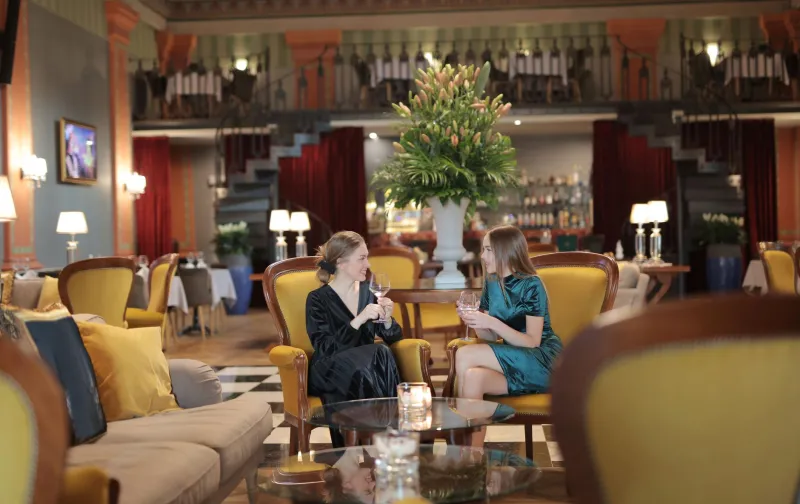
Photo: sophisticated cocktail lounge industrial neighborhood interior warm lighting urban, via artplugged.co.uk
For most of the twentieth century, the geography of American nightlife was essentially fixed. The finest bars occupied the finest addresses — hotel lobbies in prestigious zip codes, ground-floor spaces in buildings whose names carried their own social currency. To open a serious lounge in an unfashionable neighborhood was considered either an act of visionary courage or a straightforward miscalculation. More often, it was the latter.
That calculus has shifted considerably.
Across the United States, a cohort of thoughtful, ambitious operators is opening genuinely sophisticated venues in locations that would have seemed counterintuitive — even reckless — a decade ago. The results have been, in many cases, quietly extraordinary: neighborhoods transformed, communities cultivated, and a new understanding of where refined social life can take root.
The Logic of the Overlooked Location
The decision to open a high-caliber lounge in an unconventional location is rarely impulsive. It is, in most cases, the product of careful analysis — of real estate economics, demographic shifts, and a considered reading of where urban professionals are actually living, as opposed to where the hospitality industry has historically assumed they prefer to gather.
The story of American urban migration over the past fifteen years has been well documented: the movement of educated, financially stable adults into neighborhoods once defined by industrial use or working-class character, drawn by lower housing costs, architectural interest, and the appeal of something that feels, at least initially, unscripted. These residents bring with them expectations formed in more established venues — a preference for craft spirits, considered service, and environments designed with genuine intention — and they are frequently underserved by the commercial infrastructure of their adopted neighborhoods.
This gap is precisely what the most perceptive operators have identified and moved to fill.
Case Studies in Displacement
Consider what has occurred in certain sections of Detroit's Midtown and New Center districts over the past several years. Once characterized primarily by their proximity to cultural institutions — the Detroit Institute of Arts, the Charles H. Wright Museum — these areas have become home to a cluster of refined drinking establishments whose quality would not be out of place in any major American city. The clientele is local, loyal, and sophisticated; the programming ambitious; the spirits programs genuinely impressive.
Similar patterns are visible in Pittsburgh's Lawrenceville neighborhood, in the North Loop area of Minneapolis, in Oklahoma City's emerging Automobile Alley, and in portions of Richmond, Virginia that the national hospitality press has only recently begun to notice. In each case, the presence of a serious lounge has functioned as a kind of social anchor — a place around which a community of like-minded adults can organize their evenings and, by extension, their sense of belonging to a particular place.
"We chose this block specifically because there was nothing else like us within a mile," explains the co-owner of a well-regarded lounge in Pittsburgh's Lawrenceville neighborhood, speaking about the venue's 2019 opening. "We weren't trying to compete with anyone. We were trying to create something that the neighborhood needed and didn't know it needed yet."
This posture — anticipatory rather than reactive, community-minded rather than competitive — characterizes the best operators working in unconventional markets.
The Effect on the Neighborhood
The relationship between a refined lounge and its surrounding neighborhood is rarely simple, and it is worth examining with some candor. The arrival of a sophisticated venue in a historically modest area carries genuine tensions: the risk of accelerating gentrification, of displacing the residents whose presence made the neighborhood interesting in the first place, of commodifying an authenticity that cannot survive commodification.
The operators who navigate this most successfully tend to be those who invest meaningfully in their immediate communities — sourcing from local producers, employing locally, designing spaces that reference the neighborhood's actual history rather than a sanitized version of it. The lounge that feels parachuted in from another city will always occupy its block with a certain unease. The one that understands where it has landed tends to become, over time, something genuinely indispensable.
"We wanted to feel like we grew here," says the creative director of a recently opened lounge in a transitional neighborhood on the south side of Chicago. "Not like we arrived."
Secondary Markets, Primary Ambitions
Perhaps the most significant dimension of this geographic shift is the growing confidence of operators in secondary and tertiary markets — cities like Tulsa, Boise, Chattanooga, and Columbus that have historically been underestimated as destinations for refined hospitality.
The demographics of these cities have changed substantially. Remote work has redistributed a significant portion of the American professional class away from primary markets, and these transplants carry with them both the expectations and the spending habits formed in more established cities. The local entrepreneurial class in many of these markets has also matured considerably, creating a native demand for sophisticated venues that did not exist in the same form a generation ago.
The lounge that opens in Chattanooga today is not making a compromise. It is making a calculation — one that an increasing number of operators are finding to be well-founded.
A Redrawing of the Map
What all of this suggests is a genuine reorientation of American nightlife geography — not a wholesale abandonment of traditional centers, but a meaningful expansion of where serious, considered hospitality can thrive. The finest evening of your week may no longer require a reservation in the most prestigious district of your city. It may be waiting for you six blocks from your front door, in a building you have walked past a hundred times without pausing.
At Lounge 72, we consider this development not a disruption but a maturation — evidence that the appetite for genuine refinement in American social life is broader, more distributed, and more resilient than the conventional wisdom has ever given it credit for being.