Rooted in Place: How America's Regional Lounge Scenes Are Rewriting the Rules of Refinement
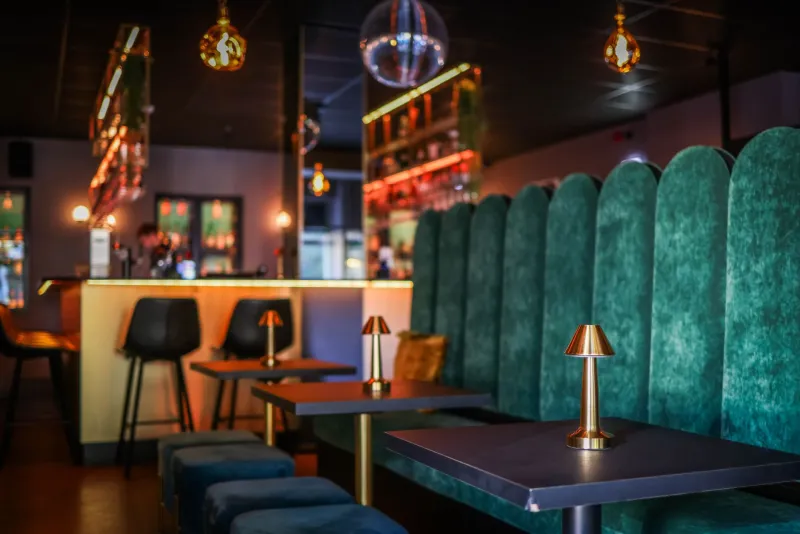
There was a time when the ambition of a great American lounge was to feel like it could belong anywhere—polished, neutral, and aspirationally European. That era is quietly concluding. Across the country, the most celebrated bars and lounges are now defined not by their universality, but by their specificity. They taste like somewhere. They smell like a particular city after rain. They carry the fingerprints of a region's agricultural history, its immigrant communities, its weather, and its particular relationship with time.
For the discerning traveler, this is not an inconvenience to be managed. It is precisely the point.
Miami: Where Latin Sophistication Sets the Tempo
No American city has more aggressively staked its claim on a distinctive lounge identity than Miami. Walk into any of the elevated cocktail rooms along Brickell Avenue or tucked within the art-dense corridors of Wynwood, and you encounter something that resists easy categorization. The bartenders here are as likely to reach for aged rhum agricole or Venezuelan rum as they are for a standard American whiskey. Citrus is deployed with a precision that feels almost architectural. The garnishes carry the influence of Cuban, Colombian, and Haitian traditions, and the result is a cocktail culture that is simultaneously tropical and rigorously formal.
What Miami's finest lounges understand is that Latin sophistication operates on its own register—one that prizes sensory abundance without sacrificing elegance. The pacing is unhurried in a way that differs from, say, a New York establishment's deliberate minimalism. Here, the evening is meant to breathe. Tables linger. Conversations spiral. The lounge is not a prelude to the night; it is the night's primary architecture.
Establishments like the bar programs at certain Coral Gables private clubs have built their reputations on this philosophy, sourcing ingredients from the Caribbean basin and presenting them with a formality that surprises guests accustomed to associating tropical flavors with casualness. Miami's lounge culture insists that the two are not in conflict.
Chicago: Bourbon, History, and the Weight of Tradition
If Miami is kinetic, Chicago is gravitational. The city's lounge culture draws from a deep well of American history—from the Prohibition-era speakeasies that once operated beneath the Loop to the gentlemen's clubs that shaped the city's industrial aristocracy in the late nineteenth century. That inheritance is not merely decorative. It shapes how Chicago's finest lounges approach the act of hospitality itself.
Bourbon is the organizing spirit here, and the city's most respected establishments treat its selection with a seriousness that borders on scholarly. Single-barrel allocations from Kentucky distilleries arrive quietly, often without announcement, and are poured with the kind of reverence typically reserved for aged Burgundy. The back bars of Chicago's premier lounges are less retail displays than curated arguments—each bottle a position in an ongoing conversation about American whiskey's past and its future.
The room itself tends toward dark wood, leather, and the kind of ambient warmth that suggests the weather outside is always worse than it actually is. Chicago's lounge culture is, in many respects, a rebuke to the transient. It rewards regulars. It accumulates meaning over time. A newcomer is welcome, but the room belongs, in some essential way, to those who have been coming for years.
San Francisco: Precision, Restraint, and the Aesthetics of Intention
The Bay Area's lounge culture is perhaps the most philosophically self-conscious in the country—a quality that reflects the broader intellectual character of a city shaped by technology, counterculture, and an almost aggressive commitment to doing things with purpose. San Francisco's most refined lounges are exercises in considered restraint. Menus are brief. Ice is cut with uncommon care. Spirits are sourced from small producers whose backstories are as important as their flavor profiles.
The influence of the tech economy is legible not in ostentation—quite the opposite—but in a certain systems-thinking approach to the cocktail program. Every element is interrogated. Why this vermouth? Why this ratio? Why this glass? The answers are always available, delivered by bar staff whose knowledge is both broad and deep, and who have been trained to share it without condescension.
The aesthetic tends toward the spare and the natural: raw concrete, reclaimed wood, lighting that mimics the particular quality of late-afternoon fog. This is not minimalism as deprivation. It is minimalism as a form of respect—for the guest's attention, for the craft of the drink, and for the integrity of the space itself.
New Orleans: The City That Invented the Cocktail and Never Forgot It
Any survey of American regional lounge culture that omits New Orleans is an act of willful negligence. The city did not merely participate in the history of the American cocktail; it authored a substantial portion of it. The Sazerac, the Vieux Carré, the Ramos Gin Fizz—these are not historical curiosities. In the finest establishments of the French Quarter and the Garden District, they are living documents, poured with a fidelity to original recipes that amounts to a civic responsibility.
What distinguishes New Orleans' lounge culture from nostalgic pastiche is its insistence on continuity rather than revival. The city's great bars did not stop serving these drinks and then bring them back. They simply never stopped. That unbroken lineage produces something that no amount of research and recreation can replicate: an authenticity that is felt rather than performed.
The Case for Regional Fluency
For the professional traveler who moves between these cities with regularity, developing a literacy in regional lounge culture is not a frivolous pursuit. It is a form of social intelligence. Knowing that your Chicago counterpart will take a certain pride in the establishment's bourbon selection, or that your Miami client expects the evening to unfold at a particular pace, is knowledge that translates directly into the quality of the encounter.
The homogenized luxury experience—the same marble, the same global spirit list, the same ambient playlist—has its uses. But it offers no particular insight into the place you are visiting, and it offers your host no opportunity to share what makes their city singular.
America's regional lounge cultures, at their finest, are acts of civic expression. They are arguments, made in glass and wood and spirit, about what a particular city values and how it chooses to spend the hours after dark. For those who know how to listen, they are among the most eloquent arguments the country makes.