Behind the Bar, a Biography: What Rare Spirits Reveal About the Minds That Collect Them
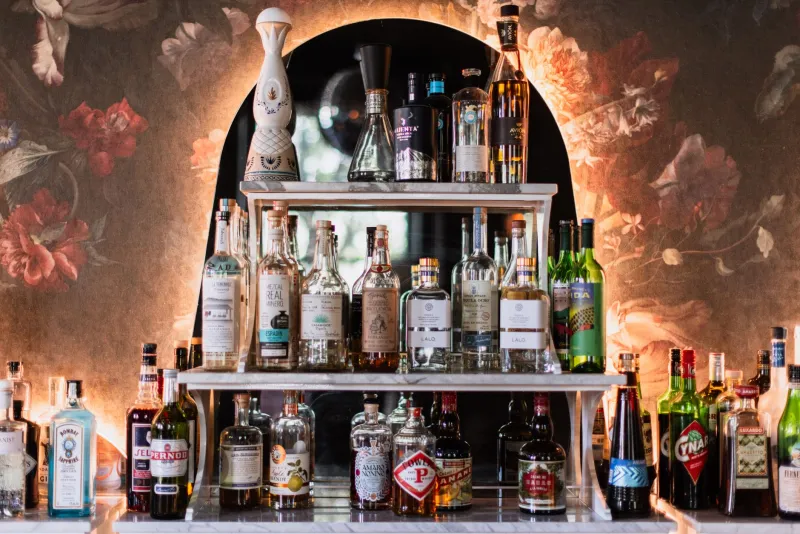
Walk into any lounge worth your time and resist, for a moment, the instinct to sit down. Stand instead at the bar and look at what is behind it. Not at the familiar labels arranged in neat rows for rapid service, but at the upper shelves — the ones that require a step stool and a conversation. What you find there will tell you more about the establishment than any review ever could.
The rare spirit collection of a serious lounge is not a shopping list. It is a worldview made tangible.
The Curator's Sensibility
The bar directors who have elevated their back bars to genuine collections describe their acquisitions in language more commonly associated with art than with hospitality. Words like provenance, intention, and irreplaceability appear naturally in their conversation. The bottles they seek are chosen not for their marketability but for what they represent — a particular distillery's moment of excellence, a family's uncompromising vision, a production method that the industry has since abandoned in favor of efficiency.
"Every bottle on that top shelf is there because I can tell you exactly why it matters," one bar director at a respected Chicago establishment explained during a recent conversation. "If I can't articulate its story, it doesn't earn the space."
This curatorial rigor produces back bars that function as three-dimensional arguments. An arrangement of Armagnacs spanning four decades is a statement about the virtue of patience. A collection of single-barrel American whiskeys from distilleries that no longer operate is a meditation on impermanence. The guest who notices these things — and a certain kind of guest always does — understands that they have entered a room with a point of view.
Discontinued and Irreplaceable
Among the most telling categories in any serious collection are the discontinued expressions: bottles from distilleries that have closed, production runs that were never repeated, and limited releases that were overlooked at the time and are now effectively unobtainable.
These bottles serve a dual function. Practically, they offer guests access to spirits that cannot be purchased anywhere at any price. Philosophically, they signal a proprietor who was paying attention before it was fashionable to do so — who acquired these bottles not for their eventual scarcity value, but because they recognized their quality in the moment.
In certain San Francisco and New York lounges, the discontinued Scotch whiskies from distilleries lost to industry consolidation in the 1980s and 1990s occupy a place of particular reverence. To pour from one of these bottles is to participate in a form of preservation — to taste something that exists in diminishing quantity and will, eventually, exist not at all.
Family-Owned Expressions and the Value of Resistance
Equally revealing is the presence of spirits from family-owned producers who have resisted acquisition by the major conglomerates. These bottles — often from smaller American craft distilleries, independent Cognac houses, or the handful of Japanese whisky producers who have declined international partnership arrangements — communicate something specific about a proprietor's values.
The decision to stock a small-production, independently operated spirit over its more commercially prominent competitor is an editorial choice. It says: we have looked at what the market offers and we have chosen differently. It says: we know the difference, and we assume you do too.
For the guest who shares these values, encountering such a collection is a form of recognition. The lounge has, without a word, communicated that it understands a certain way of thinking about quality — one that prioritizes integrity of process over volume of production.
The Back Bar as Architectural Statement
Beyond their contents, rare spirit collections function as visual and spatial experiences. The finest examples are arranged with the deliberateness of a gallery installation — bottles grouped by region, era, or thematic relationship, lit to highlight their color and depth, and interspersed with objects that provide context: a vintage distillery photograph, a handwritten tasting note, an antique measuring vessel.
This attention to presentation reflects an understanding that the back bar is the first thing a knowledgeable guest reads upon entering. Before the menu is consulted, before the first drink is ordered, the collection announces its credentials. A disorganized back bar, however expensive its contents, communicates carelessness. A thoughtfully arranged one communicates mastery.
Reading the Room Through Its Bottles
For the guest who wishes to understand a lounge quickly and accurately, the back bar offers the most efficient education available. A predominance of Japanese whisky suggests an owner with a particular affinity for restraint and precision. An emphasis on mezcal and other agave spirits points toward someone fascinated by terroir and tradition. A deep Cognac selection indicates a francophile sensibility and a preference for the long view.
None of these collections is neutral. Each represents a series of decisions made by a person with specific knowledge, specific passions, and specific ideas about what an evening in their room should offer.
The most rewarding lounges in America are those where the collection behind the bar and the experience in front of it form a coherent whole — where the bottles tell a story that the room confirms. When that alignment is achieved, the back bar ceases to be a storage solution and becomes what its best practitioners always intended: a declaration of purpose, expressed in the most eloquent language available.