Closed Doors, Open Secrets: The Strategic Mystique Behind America's Most Selective Lounges
There is a particular kind of frustration that the discerning professional has come to recognize: the unanswered email, the disconnected number, the reservation portal that simply does not load. For most establishments, this represents failure. For a carefully considered subset of America's finest lounges, it represents policy.
The architecture of exclusivity has never been more deliberately constructed. In an era when any restaurant can be booked through an app in thirty seconds, a growing number of upscale venues have concluded that accessibility is the enemy of allure. Friction, it turns out, is a feature.
The Psychology of the Unobtainable
Human desire has long been calibrated by scarcity. What is difficult to acquire carries an elevated perceived value — not merely in economic terms, but in social and experiential ones. Behavioral economists have documented this phenomenon extensively, and the proprietors of America's most prestigious lounges appear to have internalized it completely.
When a venue withholds its direct contact information from the public, it is not being careless. It is communicating something essential: that the relationship between guest and establishment begins before the first drink is poured. The prospective patron who cannot locate a phone number is invited, implicitly, to try harder. To know someone. To be someone worth knowing.
This is not mere theater. The social capital required to gain entry to certain New York or Chicago establishments — where reservations are extended only through personal referral from an existing member or a trusted intermediary — functions as a genuine filtering mechanism. The result is a room populated not by those with the fastest internet connection, but by those with the most cultivated networks.
Word of Mouth as Gatekeeping
The oldest reservation system in the world requires no software. It requires only a trusted introduction.
Several of the most talked-about lounges operating today maintain no public-facing booking infrastructure whatsoever. Their clientele grows through what hospitality insiders describe as "organic introduction" — an existing guest vouches for a prospective one, the name is passed along, and a table materializes through channels that remain deliberately obscure to outsiders.
This model carries meaningful implications for the experience itself. When every person in the room has been, in some sense, curated, the ambient social environment shifts. Conversations are more substantive. Professional affiliations are more rarefied. The sense of being among one's own — whatever that means to the individual — is more reliably achieved.
The lounge becomes, in effect, a private club without the formal membership apparatus. The rules are unwritten precisely because they are understood.
Opacity as Brand Identity
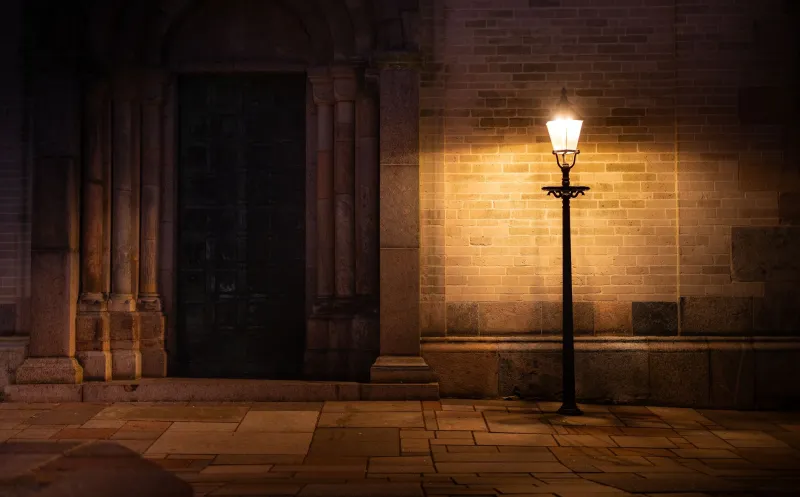
For venues that have embraced this philosophy, the absence of a digital footprint is itself a statement. No OpenTable listing. No Yelp page claimed. Sometimes, no street-level signage beyond a discreet number above an unmarked door.
This is not nostalgia for a pre-internet era. It is a calculated positioning strategy for the post-saturation one. When every experience has been photographed, reviewed, and algorithmically recommended, the experience that resists documentation acquires an almost mythological status.
The lounge that cannot be Googled becomes the lounge that everyone is talking about. The table that cannot be booked becomes the table worth having. The proprietors who have understood this dynamic earliest have, paradoxically, built some of the most recognizable names in American nightlife — recognized, crucially, only within the circles that matter to them.
The Reward on the Other Side
It would be a mistake to interpret the strategy of friction as mere arrogance. The finest lounges that employ these methods do so in service of a genuine hospitality promise: that the experience awaiting the persistent guest will justify every unreturned call.
And it generally does. The rooms behind these unmarked doors tend to be exceptional — in their design, their spirit selections, their staff, and their atmosphere. The difficulty of entry is not a substitute for quality. It is a prelude to it.
For the professional who has navigated the process successfully, the reward is layered. There is the pleasure of the lounge itself, certainly. But there is also the quiet satisfaction of having been deemed worthy of access — of belonging, however briefly, to a room that not everyone can enter.
In a landscape where nearly everything is available to nearly everyone, that sensation has become genuinely rare. And in the calculus of the discerning guest, rarity remains the most reliable measure of worth.
What This Means for the Guest Who Aspires
For those who find themselves outside these circles and wish to enter them, the conventional wisdom applies: cultivate relationships with people who already belong. Frequent the peripheral venues associated with the same ownership groups. Demonstrate, through your conduct in accessible spaces, that you are the kind of guest these rooms are designed to receive.
Patience, here, is not a passive virtue. It is an active one. The lounge that makes you wait — that makes you work — is, in its way, preparing you for the experience it has promised. The anticipation is part of the offering.
And when the door finally opens, you will understand, perhaps for the first time, why it was worth keeping closed.